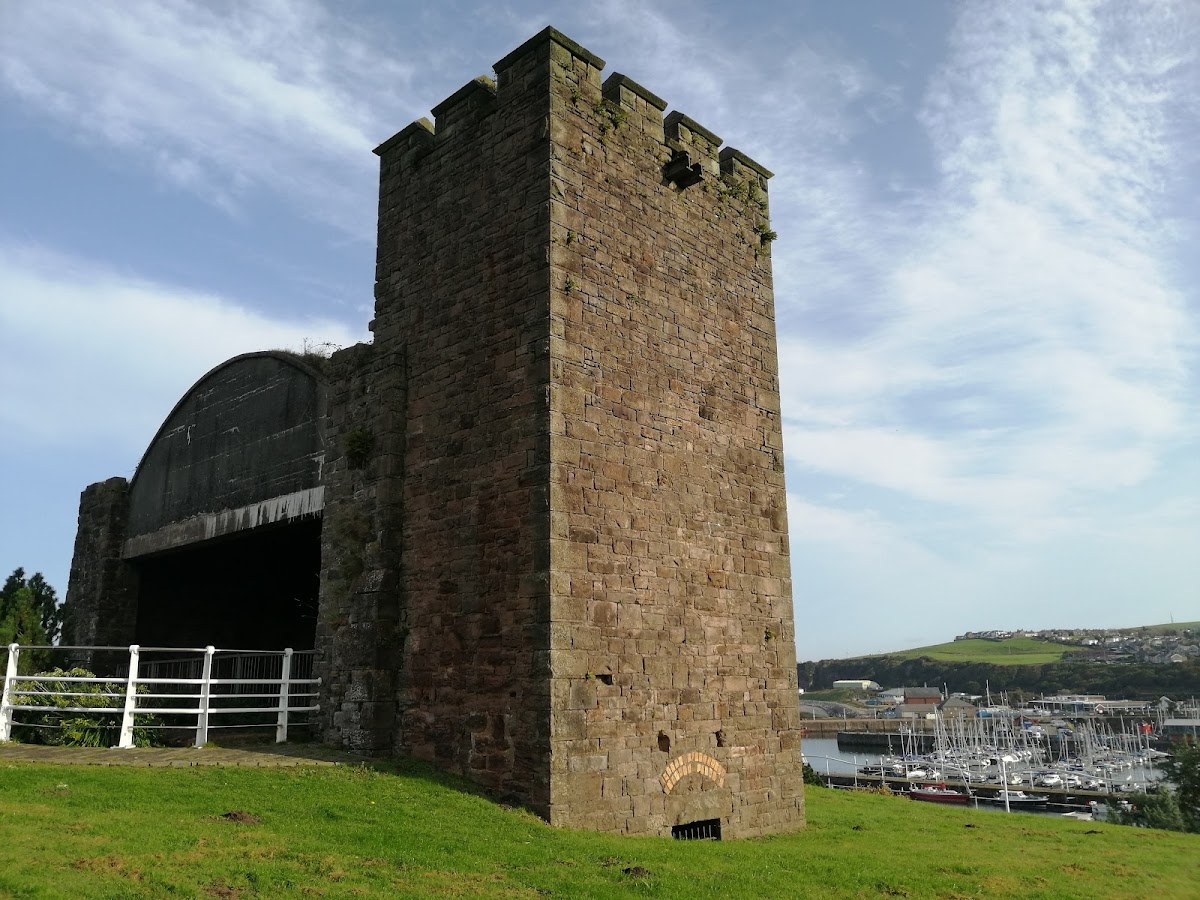
Duke Pit Fan House
About
A surviving relic of Whitehaven’s coal mining history, Duke Pit Fan House was part of the Wellington Pit complex and dates back to the mid-18th century. It originally served as ventilation for the mine, with shafts sunk by mining engineers Carlisle Spedding and John Piele. Now a historical landmark, the structure remains as an outdoor monument with an informational plaque detailing its industrial past. The site is recognised locally for its role in the area’s mining heritage, particularly as an early example of mine engineering.
Customer Reviews
I like it when old historical buildings are incorporated into the modern landscape and also serve as a memorial to past industry. There is a plaque about the previous history of this relic of the mining history of Whitehaven and also the sad loss of lives here. When we visited, we followed our own route of historical features in the town and this is a good inclusion. No cost to view & open 24/7
Taking advantage of Whitehaven’s rich coal resources, Duke Pit began here in 1747 with the first mine shaft sunk by the mining engineer, Carlisle Spedding, and the second by John Piele in 1819. In 1765, the output from this pit was 216 tons per week. Duke Pit Fan House is the remains of a fan house built in 1836. It once housed a large fan wheel measuring eight feet in diameter, which circulated air through the mine workings below. Driven by a high pressure steam engine, the fan created an air flow of 23,000 cubic feet per minute.
Part of the old mine workings, providing ventilation to the pit. I think it was a worlds first. There's a description / plaque and what remains the but not much else.